

Businesses regularly replace computers, servers, networking equipment, and storage devices as technology evolves. But once that equipment is retired, organizations face an important question: what is the safest and most responsible way to dispose of it?
Many companies assume that IT asset disposition (ITAD) and e-waste recycling are the same thing. While both involve handling old electronics, the processes and goals are very different. Understanding the difference can help businesses protect sensitive data, maintain proper documentation, and recover value from retired equipment.
In this article, we’ll explain the key differences between IT asset disposition and standard e-waste recycling, and why many organizations choose ITAD services when retiring IT hardware.
What Is IT Asset Disposition (ITAD)?
IT asset disposition (ITAD) is a structured process for managing retired IT equipment in a secure, documented, and environmentally responsible way.
Rather than simply recycling hardware, ITAD focuses on the entire lifecycle of an IT asset after it leaves production. This process typically includes:
- Secure collection and logistics
- Asset inventory and tracking
- Data destruction or sanitization
- Hardware evaluation and testing
- Value recovery through remarketing
- Responsible recycling of unusable components
The goal of IT asset disposition is to ensure that data security, compliance, and asset value are addressed before equipment is recycled.
Organizations that rely on ITAD services often include:
- Corporate offices upgrading computer systems
- Healthcare organizations handling sensitive data
- Financial institutions with strict compliance requirements
- Data centers retiring servers and networking equipment
By using a structured ITAD process, companies can maintain visibility and control over their retired equipment.
What Is E-Waste Recycling?
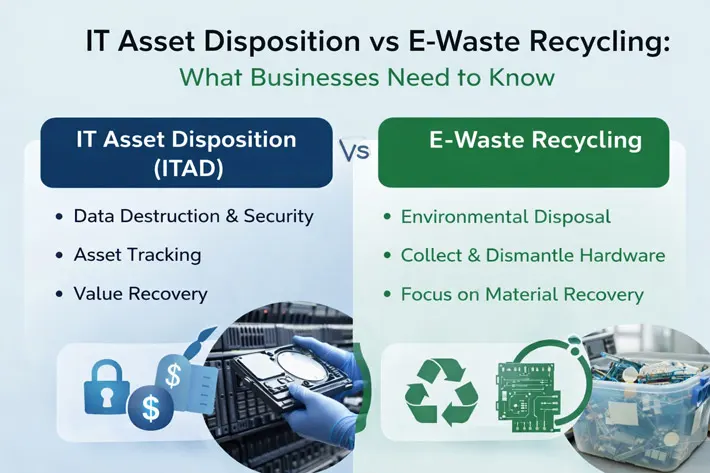
E-waste recycling focuses primarily on environmentally responsible disposal of electronics.
When electronics are recycled, they are typically dismantled so valuable materials like copper, aluminum, and precious metals can be recovered. The recycling process may include:
- Disassembly of electronic devices
- Separation of metals and components
- Material processing and recycling
While recycling is important for sustainability, many e-waste recycling services focus only on collecting and processing materials, not on data security, asset tracking, or value recovery.
For example, a basic recycling service may accept:
- Old computers
- Printers
- Monitors
- Consumer electronics
These items are generally processed as material waste rather than tracked IT assets.
Key Differences Between ITAD and E-Waste Recycling
Although both services handle retired electronics, they serve different purposes.
1. Data Security
One of the most important differences is how data is handled.
IT asset disposition services prioritize secure data destruction. Storage devices such as hard drives and SSDs are either wiped using approved methods or physically destroyed to ensure sensitive information cannot be recovered.
Basic e-waste recycling programs may not include formal data destruction procedures, which can create potential data security risks.
2. Asset Tracking and Documentation
ITAD providers typically maintain detailed documentation throughout the disposition process.
This can include:
- Asset inventory reports
- Chain-of-custody documentation
- Certificates of data destruction
- Service reports
These records help businesses maintain accountability and internal documentation for retired equipment.
Standard recycling programs often operate more like a drop-off service, where equipment is accepted but not individually tracked.
3. Value Recovery
Another major difference is asset value recovery.
Many retired IT assets still have resale value, particularly enterprise hardware such as:
- Servers
- Networking equipment
- Storage systems
- Business laptops and workstations
IT asset disposition services evaluate equipment for remarketing or resale before recycling it. This allows organizations to recover value from equipment that is still functional.
Traditional e-waste recycling focuses mainly on material recovery, which means potentially valuable hardware may be dismantled instead of reused.
4. Business-Focused Services
ITAD services are typically designed to support business operations and IT teams.
These services may include:
- Scheduled pickup and logistics
- On-site data destruction
- Data center equipment removal
- Inventory documentation
- Project management for large equipment retirements
E-waste recycling programs often focus on general electronics collection rather than structured IT lifecycle management.
Why Businesses Choose IT Asset Disposition
As organizations become more aware of data security risks and compliance requirements, many are moving toward IT asset disposition rather than basic electronics recycling.
ITAD services help businesses:
- Protect sensitive information through secure data destruction
- Maintain documentation for internal records and audits
- Recover value from retired IT hardware
- Ensure responsible recycling of unusable electronics
- Simplify the logistics of removing large volumes of equipment
For companies retiring servers, storage devices, or large quantities of computers, a structured ITAD process often provides greater transparency and control.
When E-Waste Recycling May Be Enough
E-waste recycling still plays an important role in responsible electronics disposal.
In situations where equipment has no remaining value and no data security concerns, simple recycling services may be appropriate. This is often the case for:
- Consumer electronics
- Non-functional equipment
- Household devices
However, when businesses are retiring equipment that contains sensitive data or potential resale value, IT asset disposition provides additional safeguards.
Choosing the Right Approach for Retired IT Equipment
Deciding between IT asset disposition and e-waste recycling depends on the type of equipment being retired and the level of security and documentation required.
Organizations that need secure data destruction, asset tracking, and value recovery typically choose ITAD services. Those simply disposing of electronics with no security concerns may rely on basic recycling programs.
Understanding the difference between these two approaches helps businesses make more informed decisions about how to handle retired technology.
Final Thoughts
As companies upgrade technology more frequently, managing retired equipment responsibly has become an essential part of IT operations.
While e-waste recycling focuses on environmental disposal, IT asset disposition provides a structured process for data security, documentation, and asset recovery.
By choosing the right approach, businesses can protect sensitive information, maintain