

Businesses store enormous amounts of sensitive information on computers, servers, and storage devices. Even after a device is retired, the data stored on it may still exist unless it is properly removed or destroyed.
Many organizations underestimate the risks associated with retired hardware. Hard drives and solid-state drives often contain sensitive information such as customer records, financial data, internal communications, and proprietary business documents. If these devices are not securely destroyed, that data may still be recoverable.
For this reason, hard drive destruction has become a critical part of responsible IT asset management. In this article, we’ll explain why hard drive destruction is important, how the process works, and what businesses should consider when disposing of storage devices.
Why Deleting Files Isn’t Enough
One of the most common misconceptions about data security is that deleting files removes the data permanently.
In reality, deleting files usually only removes references to the data within the operating system. The actual data may remain on the storage device until it is overwritten. Specialized software tools can sometimes recover these files even after deletion.
Even formatting a drive does not always completely remove the data stored on it.
For businesses handling sensitive information, simply deleting files or formatting a device is not considered a reliable data destruction method.
What Types of Devices Store Sensitive Data?
Many different types of IT equipment store data that may need to be destroyed before disposal.
These include:
- Desktop computers
- Laptop computers
- Enterprise servers
- External hard drives
- Solid-state drives (SSDs)
- Backup systems
- Storage arrays and network storage devices
Because storage devices may contain confidential information, businesses must ensure that data is properly sanitized or physically destroyed before equipment is recycled, resold, or repurposed.
Methods of Secure Data Destruction
There are several ways to ensure data stored on a device cannot be recovered. The most appropriate method often depends on the type of device and the level of security required.
Data Wiping (Software-Based Erasure)
Data wiping involves using specialized software to overwrite existing data on a storage device multiple times.
This process replaces existing data with random patterns, making it extremely difficult to recover the original information.
Data wiping is often used when devices are intended for reuse or resale.
Physical Hard Drive Destruction
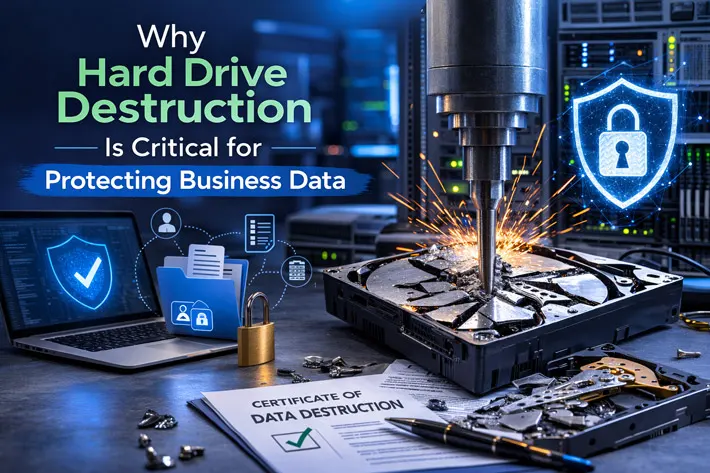
In many cases, organizations choose physical destruction of storage devices to eliminate any possibility of data recovery.
Common methods include:
- Hard drive shredding
- Hard drive drilling
- Crushing or dismantling drives
- Destroying internal drive platters
Physical destruction ensures that the device itself is permanently damaged and the data cannot be accessed again.
For organizations handling highly sensitive information, physical destruction provides an additional layer of security.
Risks of Improper Hard Drive Disposal
When businesses fail to properly destroy storage devices, several risks can arise.
Data Breaches
Improperly discarded hard drives may still contain recoverable information. If the devices are accessed by unauthorized individuals, sensitive data may be exposed.
Compliance and Legal Risks
Many industries must comply with regulations regarding how data is handled and destroyed.
Improper disposal of data-bearing devices may create regulatory or legal issues for organizations that must demonstrate responsible data handling practices.
Reputational Damage
If confidential information is exposed due to improper disposal of equipment, businesses may experience reputational harm and loss of customer trust.
Protecting data even after devices are retired is an important part of maintaining organizational security.
Hard Drive Destruction as Part of IT Asset Disposition
Hard drive destruction is often part of a broader process known as IT asset disposition (ITAD).
ITAD services focus on the responsible management of retired IT equipment, including:
- Equipment pickup and logistics
- Inventory tracking and documentation
- Secure data destruction
- Equipment evaluation and value recovery
- Responsible electronics recycling
By incorporating data destruction into the IT asset disposition process, businesses can ensure that retired devices are handled securely from collection through final processing.
Documentation and Accountability
For many organizations, documentation is just as important as the destruction process itself.
Proper data destruction procedures often include:
- Asset tracking records
- Chain-of-custody documentation
- Certificates of data destruction
- Processing reports
These records help organizations maintain accountability for retired equipment and demonstrate responsible handling of sensitive data.
When Should Hard Drives Be Destroyed?
Hard drive destruction is typically recommended when:
- Equipment contains sensitive or confidential data
- Devices cannot be reliably wiped using software methods
- Storage hardware is damaged or nonfunctional
- Equipment is being recycled rather than reused
In these situations, physical destruction helps eliminate the risk that information could be recovered from the device.
Responsible Recycling After Destruction
Once storage devices have been destroyed and sensitive data is no longer accessible, remaining components can be processed through responsible electronics recycling.
Recycling allows valuable materials such as aluminum, copper, and rare metals to be recovered and reused in the production of new electronics.
Responsible recycling also helps reduce environmental impact by keeping electronic waste out of landfills.
Final Thoughts
As organizations upgrade and retire technology more frequently, protecting data stored on old equipment has become a critical security concern.
Hard drive destruction ensures that sensitive information stored on retired devices cannot be accessed or recovered. By combining secure destruction with proper documentation and responsible recycling, businesses can safely manage the final stage of their IT asset lifecycle.
Understanding the importance of secure data destruction helps organizations reduce risk, protect confidential information, and maintain responsible IT equipment disposal practices.